Product Description
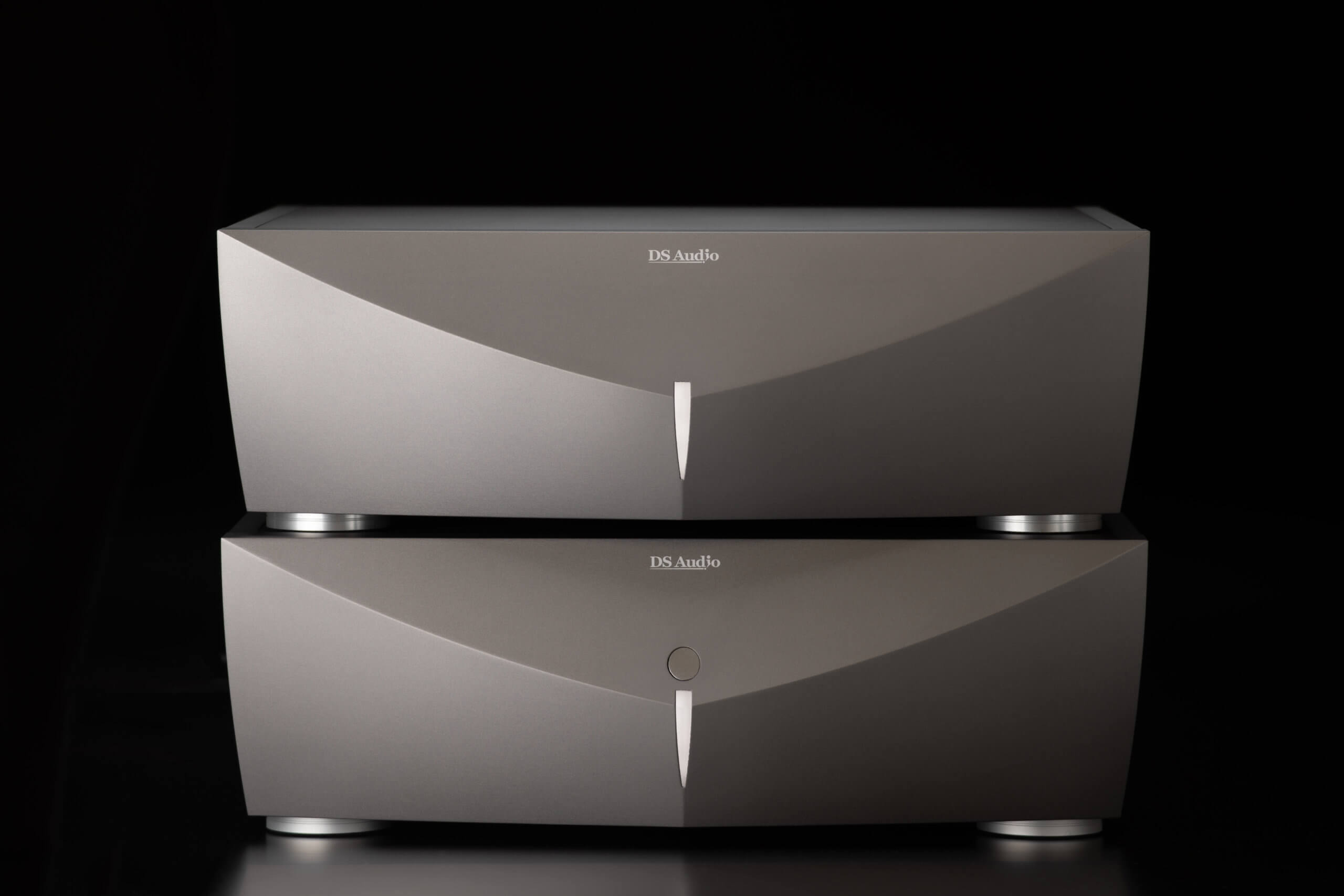
The DS Audio Grand Master system features a separate equalizer and power supply, each in an independent chassis. Using 2.34 million uF and 2.97 million uF electrolytic capacitors within the equalizer and power supply units, respectively, has resulted in a significantly stronger power supply design and improved reproduction of deeper low frequencies. In addition, the Grand Master equalizer incorporates special film capacitors custom-built to DS Audio’s specifications, along with non-induction winding resistors. The design features three transformers, each with a capacity 1½ times greater than that of the DS Master 1, one for the left and one for right channels, with the third handling the power supply to the optical cartridge.
The Grand Master equalizer features single-ended RCA and balanced XLR outputs. Additionally, you can choose from 6 different low-frequency cut-off points, allowing it to seamlessly integrate with any hi-fi system.

DS Audio Grand Master Optical Phono Cartridge System | REVIEW
By Greg Weaver
The hell, you say? An optical phono cartridge? Yes. That’s right; no magnets, no coils, no induction-generated signals for the DS Audio Grand Master Optical Phono Cartridge System. A mechanical transduction system that uses light to regenerate your LP’s audio signal, and as a consequence, is considerably less massive, or lighter, as well!
Before we get into the specifics of how this fascinating approach works, let’s review how more typical phono cartridges, both the moving magnet and moving coil variety, accomplish their goals. The core of a moving magnet cartridge is comprised of a cartridge body that houses a set of stationary wire coils, and a pair of minuscule, powerful permanent magnets attached to the top portion of a cantilever assembly. As the stylus affixed to the bottom end of that cantilever assembly traces the groove, the directed movement of the stylus/cantilever/damper system oscillates the position of those magnets in proximity to the stationary coils. That directed oscillation of the small magnets induces a current in the coils, generating the minute electrical signal that your phono preamplifier uses to reconstruct the audio signal stamped into the LP’s groove.
READ FULL REVIEW